Trainingsmateriaal
Training Equipment
There are many different types of training equipment that can help football players develop their skills and improve their performance.
Besides the ball itself, there are several useful pieces of equipment you can use during training:
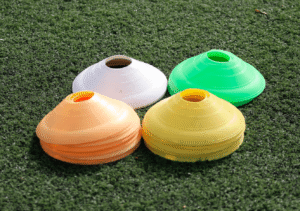
- ⚽️ Cones are ideal for dribbling drills, ball-control exercises and setting up training areas.
- Hurdles can be used to improve agility, coordination and speed.
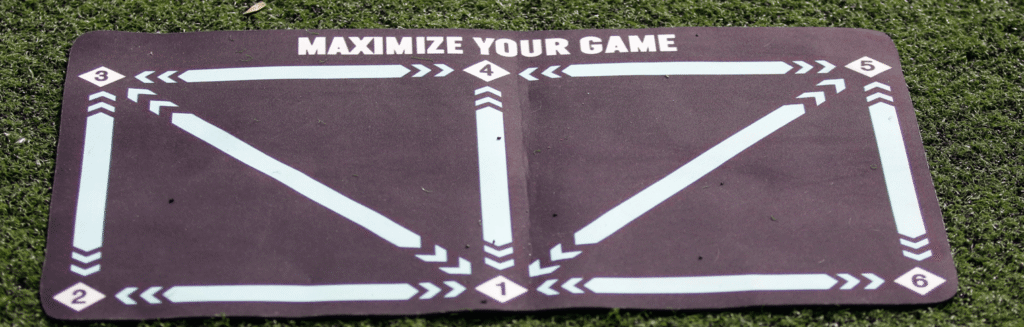
- Training mats can help develop balance and coordination.
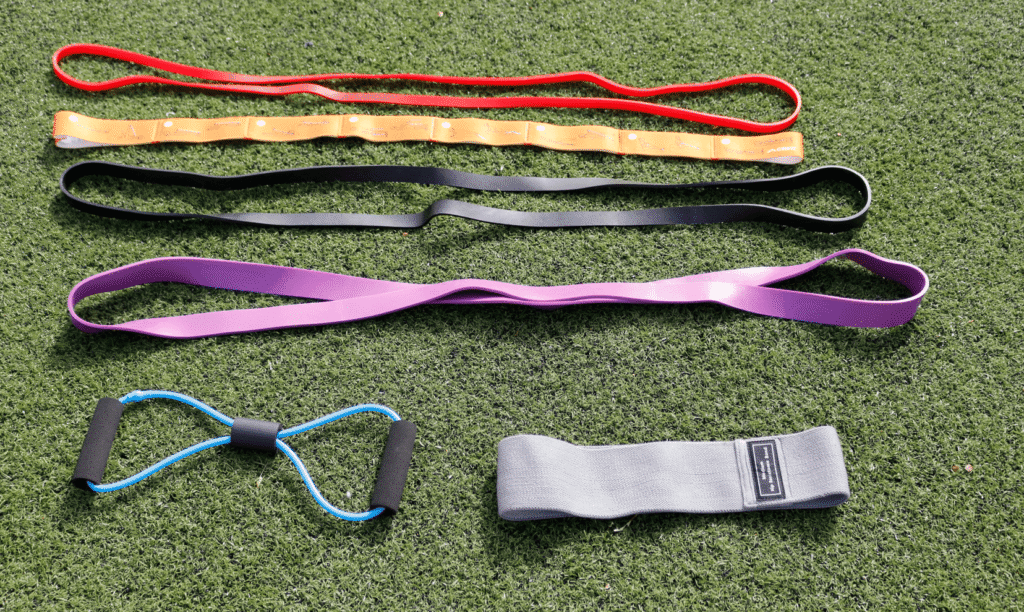
- Resistance bands can be used to strengthen the muscles in the legs and improve overall strength.
- ⚽️ In addition to a full-size goal, smaller goals are very useful for small-sided games, finishing drills and shooting exercises.
Football
Not all footballs are the same. When choosing a football, there are several factors to consider.
Voetbal bal
Ball Size
First, consider the size of the ball:
- Size 5: Players aged 13 and above, including adults.
- Size 4: Youth players aged 8–12.
- Size 3: Players aged 8 and under.
- Sizes 1 & 2: Skill-training or mini footballs, suitable for players of all ages.
Match Ball vs Training Ball
There is also a difference between a match ball and a training ball.
A match ball is generally made to a higher standard, with a softer feel, more consistent flight and excellent ball control. Many high-quality match balls are hand-stitched and are more expensive.
A training ball is designed for durability. It is made to withstand frequent and intensive use and often has a slightly firmer feel.
There are also replica balls. These are designed to look like official match balls used in competitions such as the UEFA Champions League or the Eredivisie. Replica balls are often machine-stitched and focus more on durability and affordability than professional match performance.
Playing Surface
The type of surface also matters.
For natural grass, most standard footballs are suitable.
For artificial turf, choose a ball with a durable, abrasion-resistant outer surface that can withstand the additional wear caused by the surface.
A good street football needs to be extremely durable and able to withstand hard surfaces such as asphalt and concrete. These balls often have a lower bounce and are made from durable rubber or PU materials.
⚽️
It is best not to use a standard match or training ball on the street, as the surface can quickly wear down the outer material and increase the risk of damage or punctures.
Ball Quality
There are also differences in ball construction and quality.
- PU (polyurethane) synthetic leather is commonly used for high-quality footballs. PVC is generally cheaper but tends to offer a different feel and level of durability.
- Hand-stitched balls are often associated with higher-quality construction, while thermally bonded (seamless) balls have fewer seams and can absorb less water.
- For serious matches and high-level training, FIFA Quality or FIFA Quality Pro certification indicates that the ball has passed FIFA testing for characteristics such as weight, size, rebound and shape retention.
Hesjes
Training Bibs
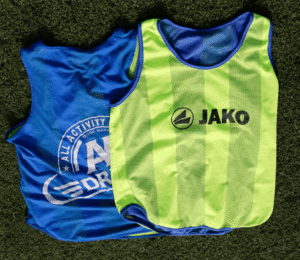
Training bibs are essential for quickly identifying teams during training sessions, small-sided games and practice matches. They are available in a wide range of colours and sizes.
⚽️
Most training bibs are made from 100% polyester, making them lightweight, breathable and comfortable to wear during training.
Parachute
Speed Resistance Parachute
A resistance parachute is a training tool designed to help football players develop acceleration, speed, strength and explosiveness during sprint training.
⚽️
The parachute consists of a large canopy attached to a harness worn around the player’s waist. When the player sprints, the parachute catches the air and creates drag resistance. This resistance forces the player to work harder during the sprint.
⚽️
Parachute training can help develop acceleration over short distances. The additional resistance increases the workload on the leg muscles and can contribute to improvements in strength and power.
⚽️
It can also be used to train sprint mechanics and stride frequency while accelerating towards top speed.
⚽️
When choosing a resistance parachute, consider its size, as larger parachutes generally create more resistance. Resistance levels can vary depending on the product and conditions, so always follow the manufacturer’s specifications.
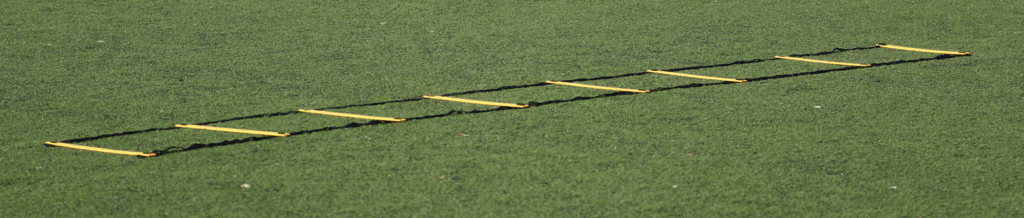
Speedladder
Speed Ladder
A speed ladder, also known as an agility ladder, is a useful training tool for footballers looking to improve their footwork, coordination, agility and movement speed.
By performing short, rapid movements through the ladder, players are encouraged to improve their foot placement and body control. These qualities can be useful when making quick changes of direction on the pitch.
⚽️
Speed-ladder drills can help develop rapid foot movements and improve a player’s ability to accelerate and change direction quickly.
They also challenge coordination and the connection between the brain and muscles, helping players react and move more efficiently.
⚽️
There are many different patterns you can perform with a speed ladder, including:
One In Each
Place one foot in each ladder space while moving forward as quickly and under control as possible.
⚽️
Icky Shuffle
A lateral in-in-out movement that challenges foot speed, coordination and agility.
⚽️
Lateral In-Out
Move sideways through the ladder, stepping in and out of each space to develop lateral foot speed and coordination.
⚽️
High Knees
Drive the knees high while moving quickly through the ladder. This drill challenges coordination, rhythm and lower-body power.